Industry Guidelines
As part of the Lead Battery 360° program we aim to promote a better understanding of what constitutes responsible lead battery manufacturing and recycling. Over the years we have developed guidelines and tools to allow stakeholders to gain a fundamental understanding of the key principles required to recycle lead batteries in a manner that avoids environmental pollution and adverse health impacts.
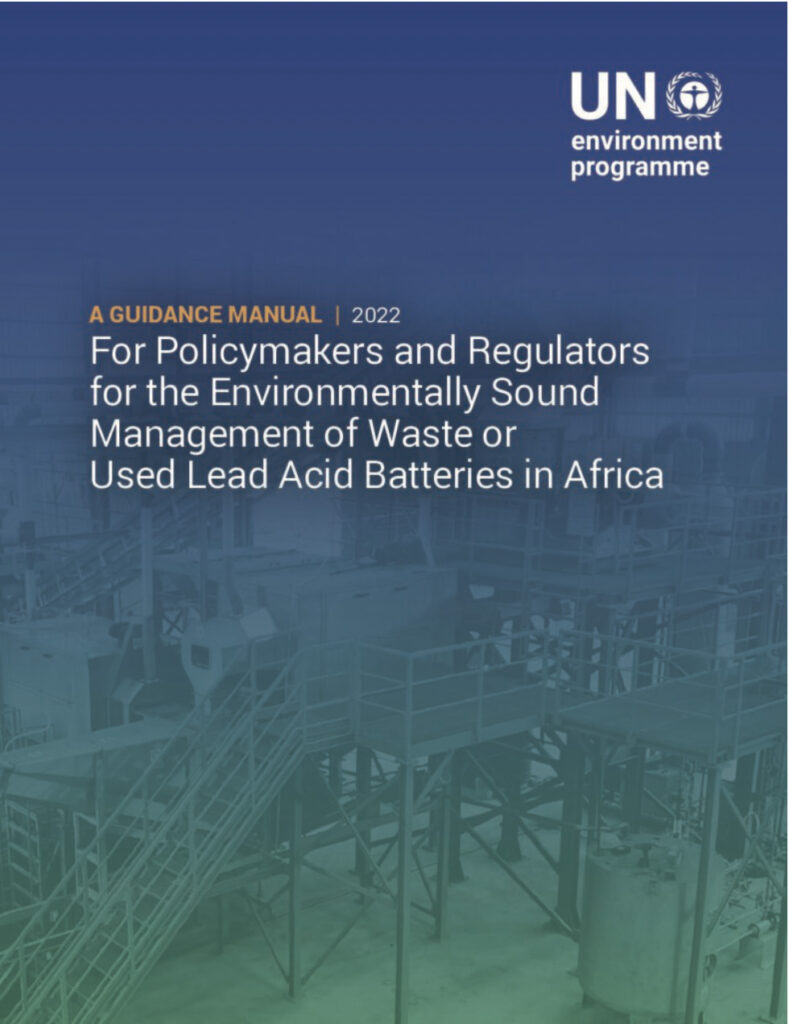
UNEP Guidance Manual for Policymakers and Regulators on the Environmentally Sound Management of Waste Lead Acid Batteries
The International Lead Association was delighted to contribute to the development of a United Nations Environment Programme guidance manual aimed at policymakers and regulators in Africa to help them develop and implement policies and regulations to ensure that waste lead-acid batteries are collected and recycled in an environmentally sound manner (ESM). As well as providing tools and strategies to help achieve this objective the document highlights case studies in Ghana, Burkina Faso, Tanzania and Nigeria.
Basel Technical Guidelines for the Environmentally Sound Management of Waste Lead-acid Batteries
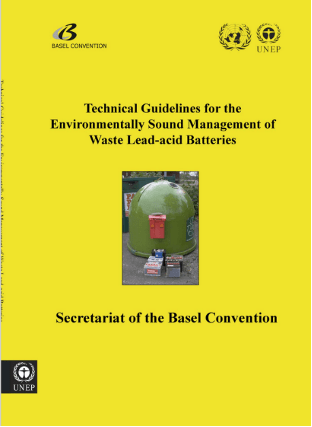
The International Lead Association has a long history of supporting the development of guidelines to facilitate the responsible recycling of lead batteries. Our expertise was the foundation for the development of the Basel Technical Guidelines for the Environmentally Sound Management of Waste Lead-acid Batteries that was published in 2003. These guidelines are currently being updated to better reflect the current state of the art.
Basel Convention Training Manual
Lead Battery 360° partners have built upon the reputation of the International Lead Association and have recently provided our technical support to allow UNEP to develop a Basel Convention Training Manual to assist government agencies to prepare national strategies and policies for the environmentally sound management of used lead batteries.
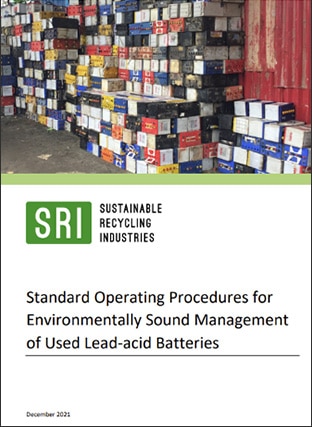
Standard Operating Procedures for Environmentally Sound Management of Used Lead-acid Batteries
Sometimes guidelines need to be made a little simpler to allow stakeholders to get a fundamental understanding of the key principles required to recycle lead batteries in a manner that avoids environmental pollution and adverse health impacts. Lead Battery 360° partners were delighted to work with Sustainable Recycling Industries (SRI) to produce a series of standard operating procedures (SOPs) on lead battery recycling for the government of Ghana .
The SOPs are structured and developed in a format and style that is:
- practical (covering all process steps);
- understandable (also for persons with no specific technical know-how);
- concise (no lengthy texts);
- supported with pictures and diagrams.
They are intended for use in low and middle income countries where regulators may not have a good understanding of the procedures that should be adopted by lead battery recyclers to protect human health and the environment.
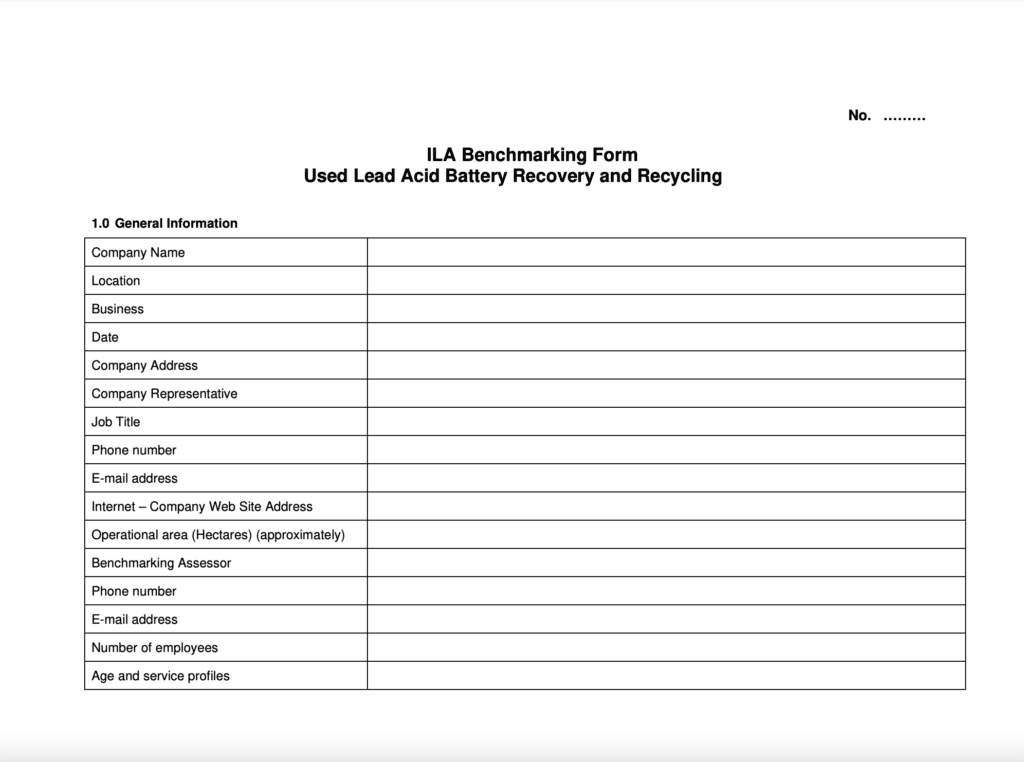
Another tool that we have developed to improve understanding of requirements to support environmentally sound lead battery recycling is the “Benchmark Assessment Tool” . This allows users to undertake a comprehensive and easy to use evaluation process that is consistent with the Basel Convention Technical Guidelines for the environmentally sound management of lead battery recycling.
The tool allows an assessment of practices at the various stages in the lead battery lifecycle including:
- Used battery collection
- Storage
- Packaging
- Transportation
- Recycling
The tool has been shown to be particularly effective in improving practices in regions where informal or basic lead battery recycling facilities are prevalent.
Assurance Framework
As part of the Lead Battery 360° programme we are developing a comprehensive Assurance Framework to promote the responsible use of lead in the battery value chain.
It is being designed to define the fundamental environmental, social, and governance elements that characterize responsible sourcing and production of lead and lead batteries; and ultimately will allow independent verification of such elements through the definition and verification of clear Performance Expectations.
Watch this space for more information to come
Other Published Guidelines
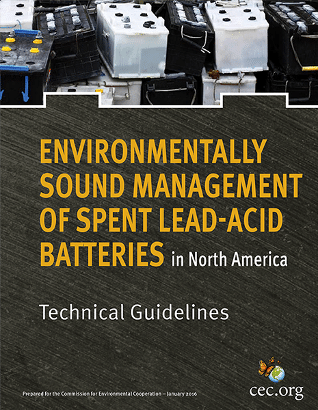
In 2016 the Commission for Environmental Cooperation (CEC) published a report providing technical guidelines for the environmentally sound recycling of spent lead-acid batteries (SLABs) in North America.
The report identifies and consolidates best practices and technologies for collecting and recycling SLABs in a manner that protects the environment, and the health and safety of workers and the public. Although developed specifically for North America the guidelines offer a good framework for the development of lead battery recycling practices in other regions.
THE PARTICIPATION JOURNEY
Verifying Participants’ Conformance to the Code
To make a Lead Battery 360° claim, participating companies go through the following process:
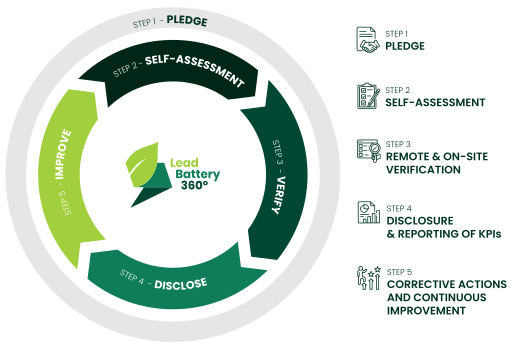
The company commits to the Guiding Principles. Once the Letter of Commitment is signed, the company becomes a “Participant” in the Lead Batter 360° program and will need to complete the following steps within 12 months.
The Participant completes a self-assessment, online, to provide evidence of conformance against the Performance Expectations underpinning the Guiding Principles, as defined in the Code. The outcome of the self-assessment will help companies understand their performance and take the time needed to mitigate potential gaps before submitting the information to the independent verifier in step 3.
The self-assessment is verified by an independent verifier remotely to provide an independent confirmation of the authenticity of assertions made in self-assessments.
Companies may voluntarily sign up to on-site verification. A requirement for on-site verification may be introduced by the program as phase 2 of the program.
To maintain their Lead Battery 360° claim, companies disclose publicly the outcome of the verification process and report annually against a set of KPIs which are collected and reported as industry trends by the Lead Battery 360° program at the aggregate level.
Companies are encouraged and offered the opportunity to advance to obtain a higher performance level by implementing improvement actions identified during verification.
Companies are subject to re-verification every three years.
Download the Verification Manual here.
THE CLAIMS
Communicating Performance against the Code
Companies that successfully complete the Lead Battery 360° verification process are able to use a Lead Battery 360° claim, in line with the Claims Guide.
Download the Claims Guide here.